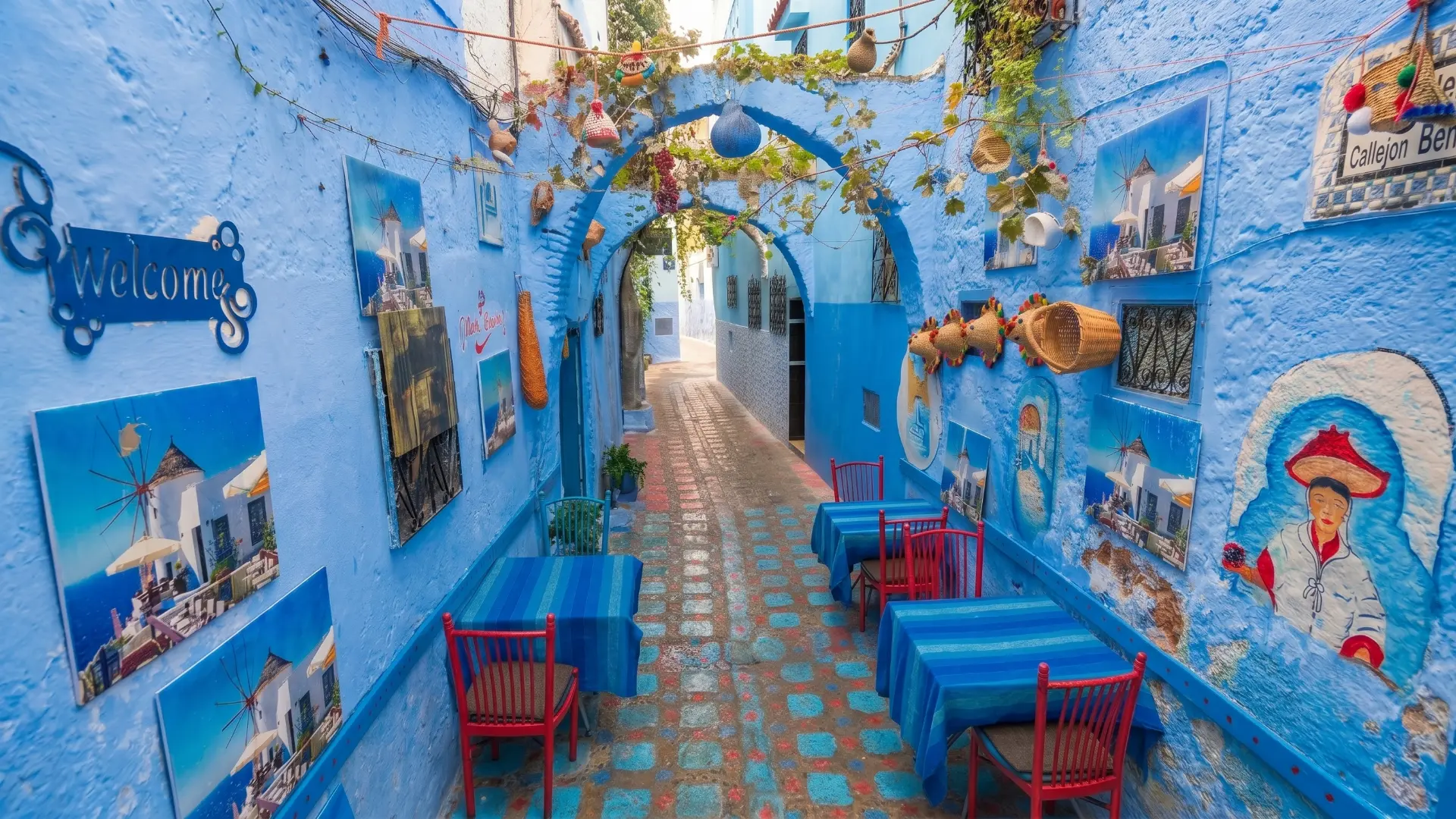
Chefchaouen (or Chawen) is, without a doubt, one of my favorite places in Morocco. I’m completely captivated by it. It’s not just the dreamy blue alleys that pull me in—it’s the incredibly warm locals, the way traditional Berber clothing drapes so beautifully (I tried it on myself more times than I can count), and hands down the most magical avocado juice in the world.
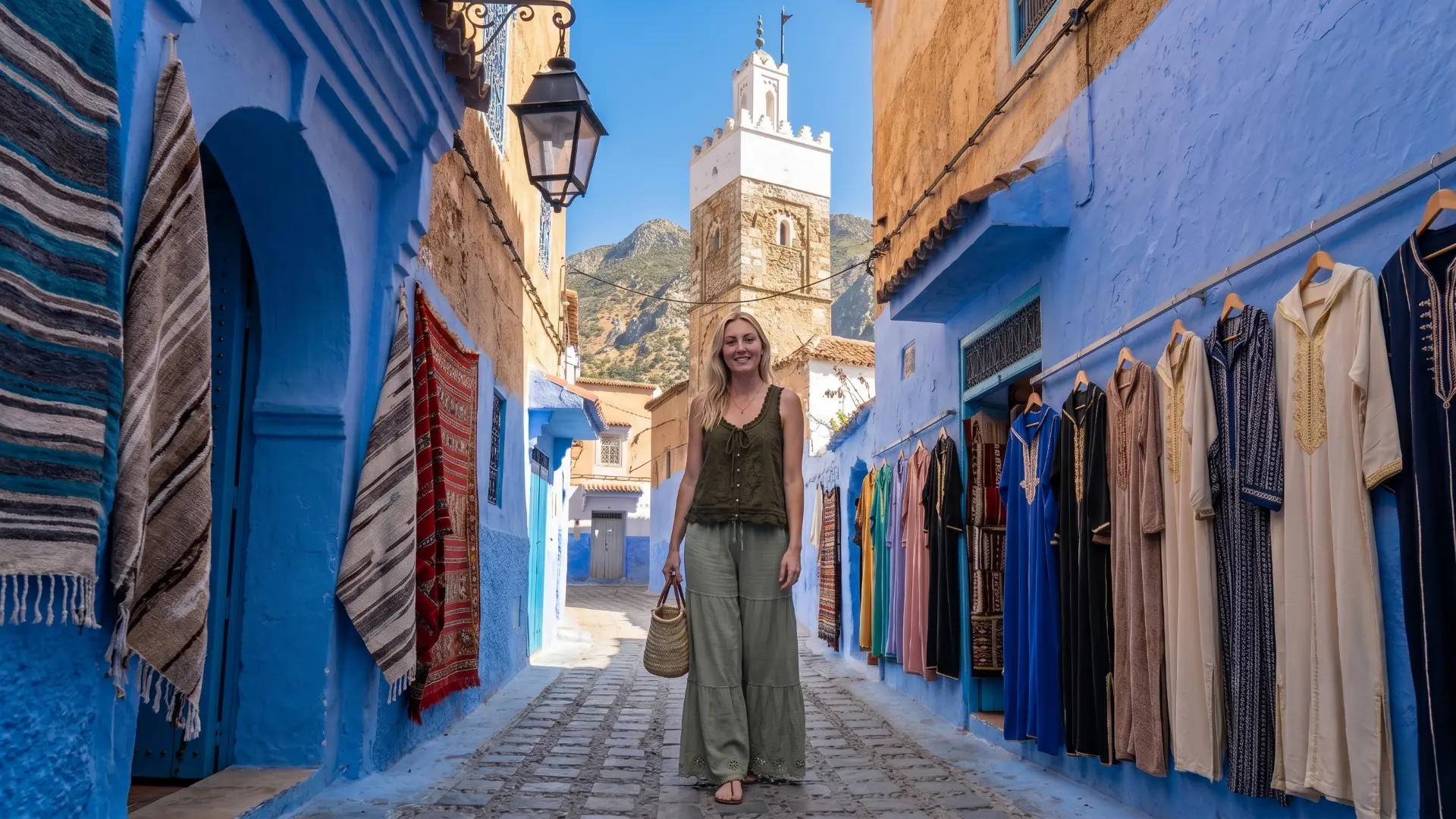
I’ve visited twice now, and both times I planned to stay just two days. Both times I doubled it to four, and honestly, even after four, I still didn’t want to pack my bag. If you’re wondering how to actually experience the Blue City without rushing through it, I’m sharing exactly what I learned, where I ate, how I moved around, and why I’d book a third trip in a heartbeat.
1. Is Chefchaouen Worth Visiting?
Absolutely, yes. It’s one of those places that looks too good to be real, then exceeds every expectation. Yes, it’s become more touristy over the years, but the magic isn’t manufactured—it’s lived in. I traveled here solo, felt completely safe, and I’d confidently recommend it to solo female travelers. Just keep your awareness high in crowded alleyways, dress modestly out of respect for local culture, and trust your gut. I’ve never felt uneasy here, only welcomed.
2. The Real History of Chefchaouen
Before it was an Instagram dream, Chefchaouen was a refuge. Founded in 1471 by Moulay Ali ibn Rashid al-Alami, it started as a fortified settlement meant to protect northern Morocco from Portuguese expansion. After the Spanish Reconquista, waves of Jewish families, Berber tribes (like the Ghomara), and Moors (Muslims forced to convert in Iberia) fled to the Rif Mountains and settled here. What you see today—the Andalusian courtyards, the intricate woodwork, the layered cultural tapestry—is the direct result of those displaced communities rebuilding their lives in these hills.
3. Why Are the Walls Blue? Theories & Truths
I’ve asked locals, guides, and historians this question on both trips, and the truth is, there’s no single answer. Here are the most widely shared stories:
- Jewish heritage: Many believe Jewish refugees in the early 20th century painted the city blue (techelet) to symbolize the sky, heaven, and divine protection.
- Natural cooling & mosquito repellent: Some say the pigment reflects heat and keeps insects away, though there’s little scientific proof.
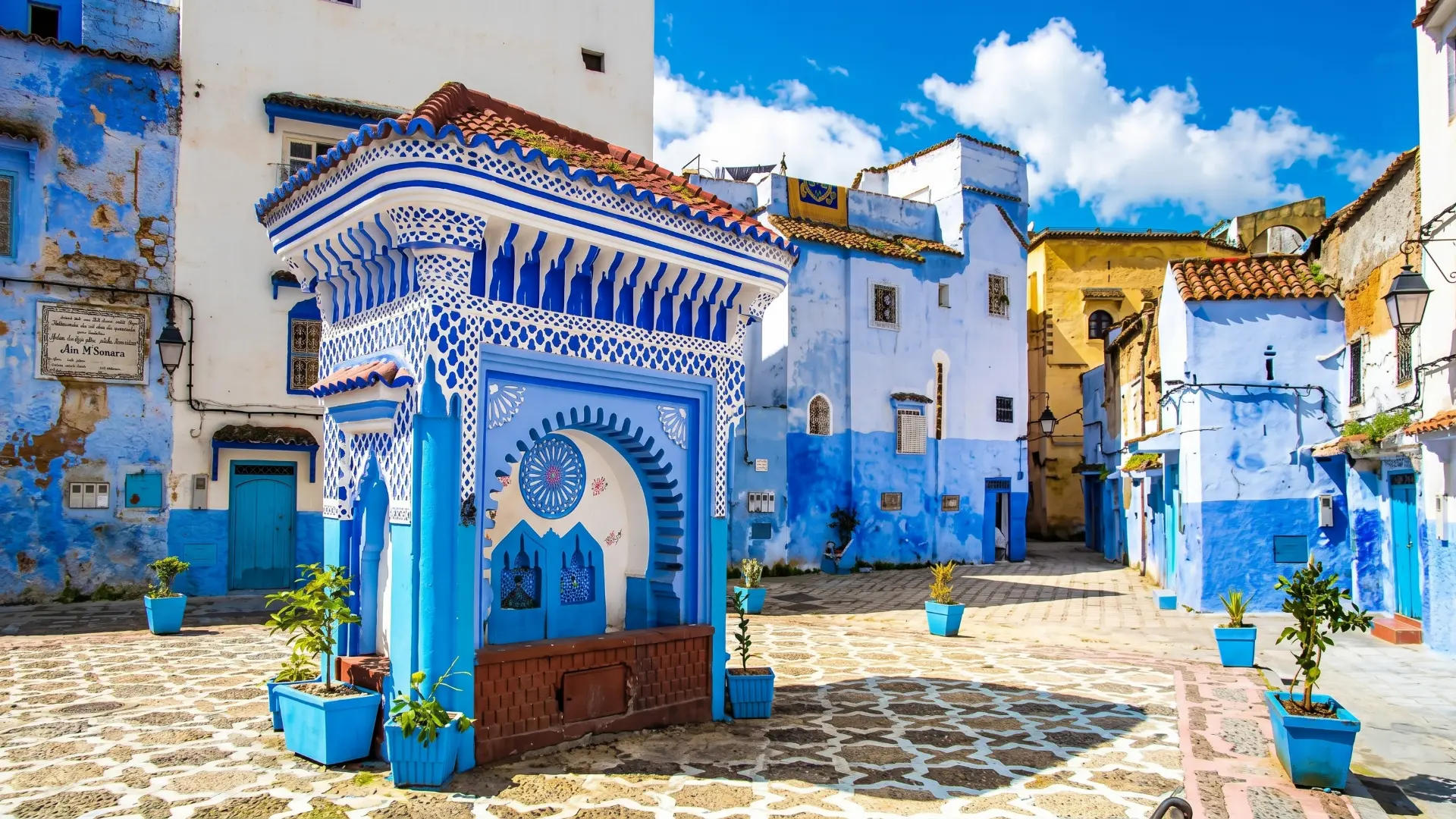
- Original tradition vs. modern upkeep: The blue likely started organically, but today the municipality actively maintains it. Homeowners refresh their façades with the same traditional lime-based paint because it’s part of the city’s identity and draws visitors respectfully. I love that it’s now a shared cultural canvas rather than a forgotten mystery.
4. How to Get to the Blue City
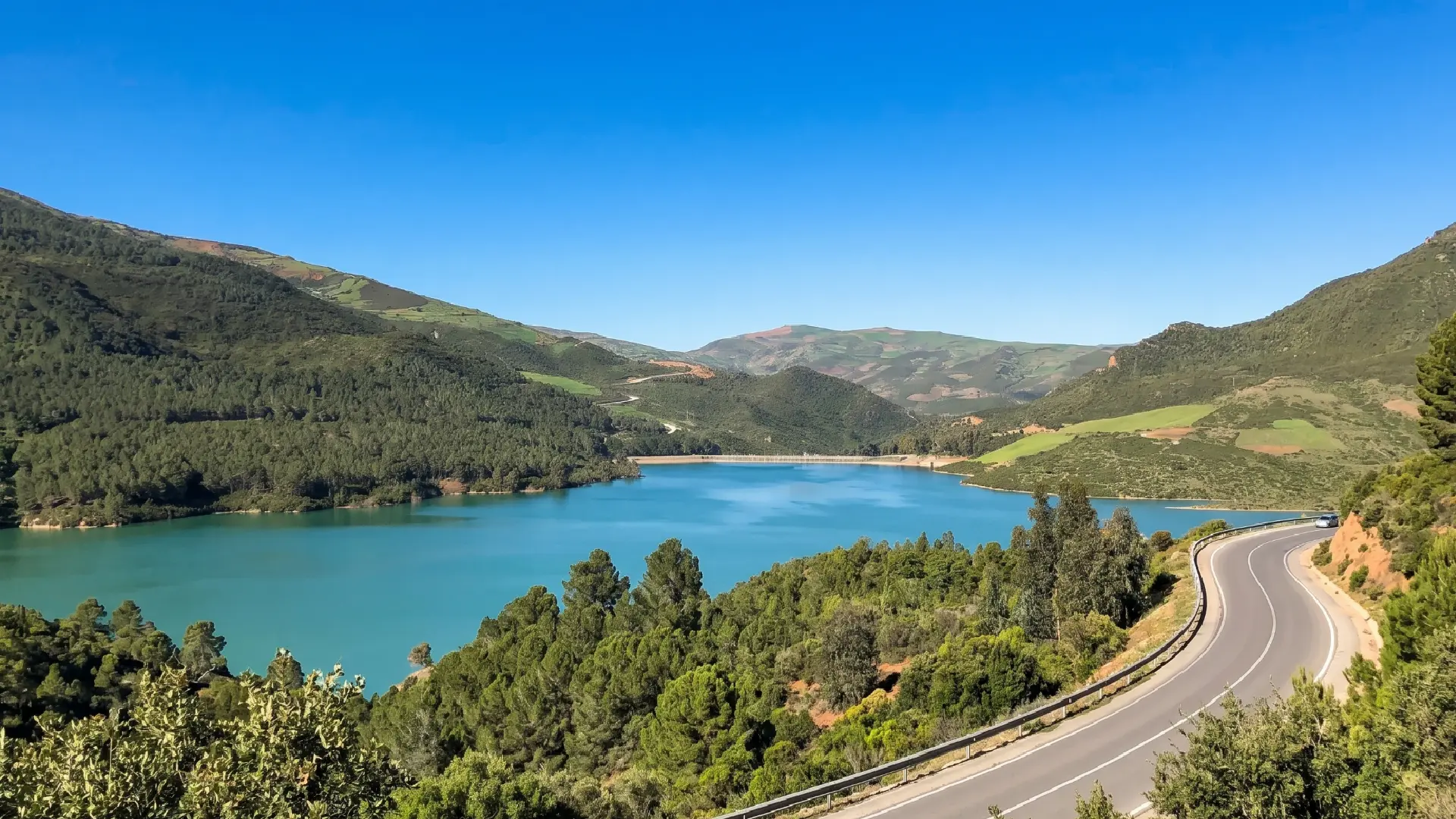
The mountains make Chefchaouen feel remote, but the transit network has gotten much smoother since my first visit.
- From Tangier (~60 km): I always recommend a shared Grand Taxi. It costs around 80–100 MAD ($8–$10) and takes about 1.5–2 hours. Buses (CTM or local operators) run for 50–80 MAD ($5–$8) but take closer to 2.5–3 hours due to stops and winding roads. I check schedules on the CTM app or book through platforms like 12Go.
- From Fes (~200 km): The bus is your best bet. Fares sit around 80–90 MAD ($8–$9), and the journey takes 3.5–4 hours through the Middle Atlas. Roads are safer now, but mountain curves mean it’s never a high-speed trip. I book morning departures to arrive before the afternoon heat.
- From Marrakech or Casablanca: Chefchaouen is too far for a direct hop. I always route through Fes or Tangier first. It’s worth the extra leg—trust me.
5. Best Time to Visit & Weather Tips
I’ve read that summer “gets too hot,” but both my summer visits (including early June) were perfectly pleasant. The mountains naturally keep temperatures a few degrees cooler than the coast or desert. Still, I’d say spring (March–May) and autumn (September–November) are ideal. The air is crisp, the light is golden for photography, and you’ll avoid the July/August peak crowds. I’ve never needed heavy winter gear, but I always pack a light sweater for cool mountain evenings.
6. How Many Days You Actually Need
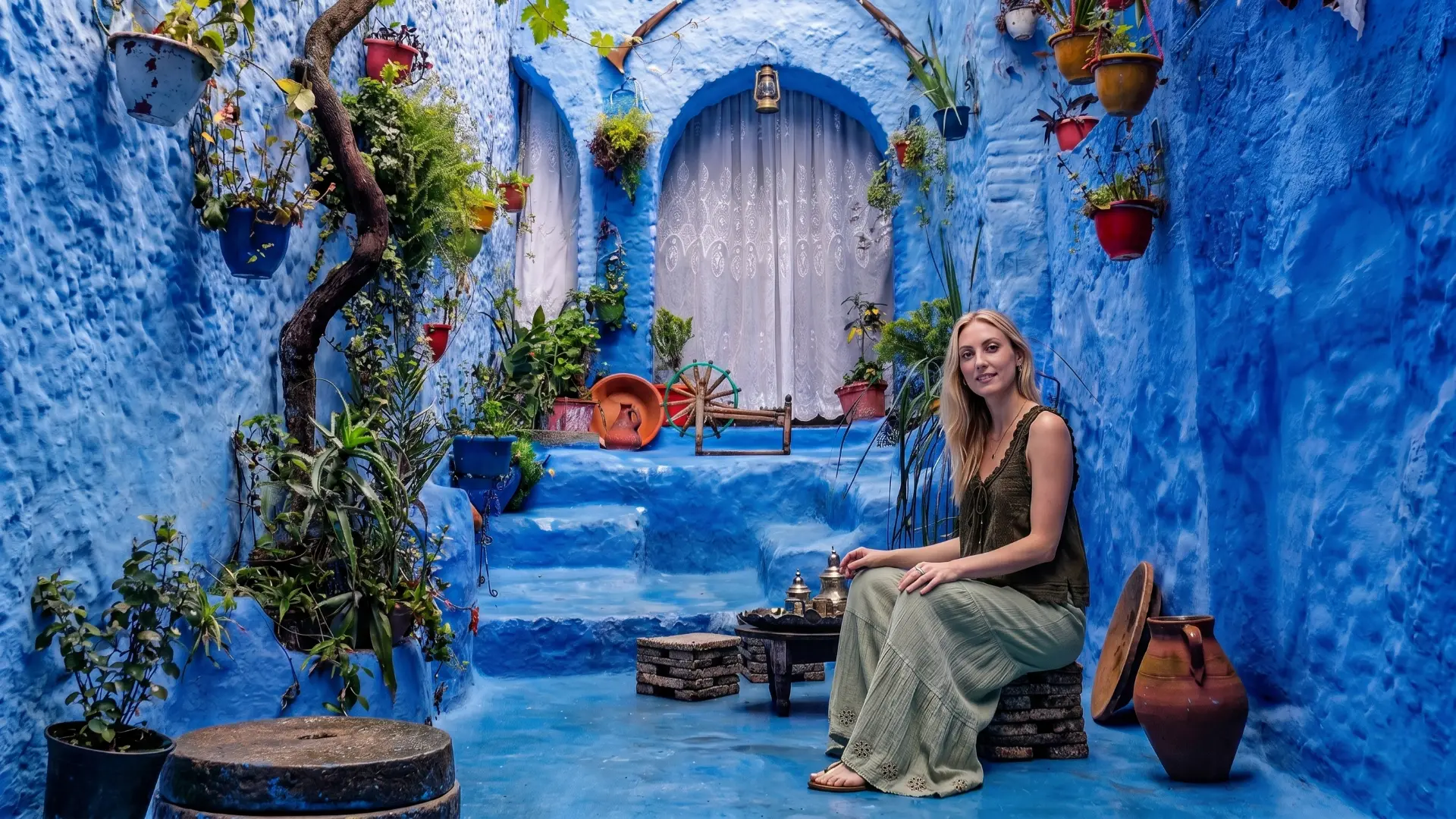
You can do a day trip from Fes or Tangier, but you’ll only see the edges. If you only have one week in Morocco, I understand squeezing it in—but if you have the flexibility, give yourself at least two full days. I stayed four days both times, and I still felt like I barely scratched the surface. Two days let you wander without a map, hike to the Spanish Mosque at sunset, sip Zaazaa without rushing, and actually absorb the rhythm of the medina.
7. Where I Stayed (and Where I’d Book Next)
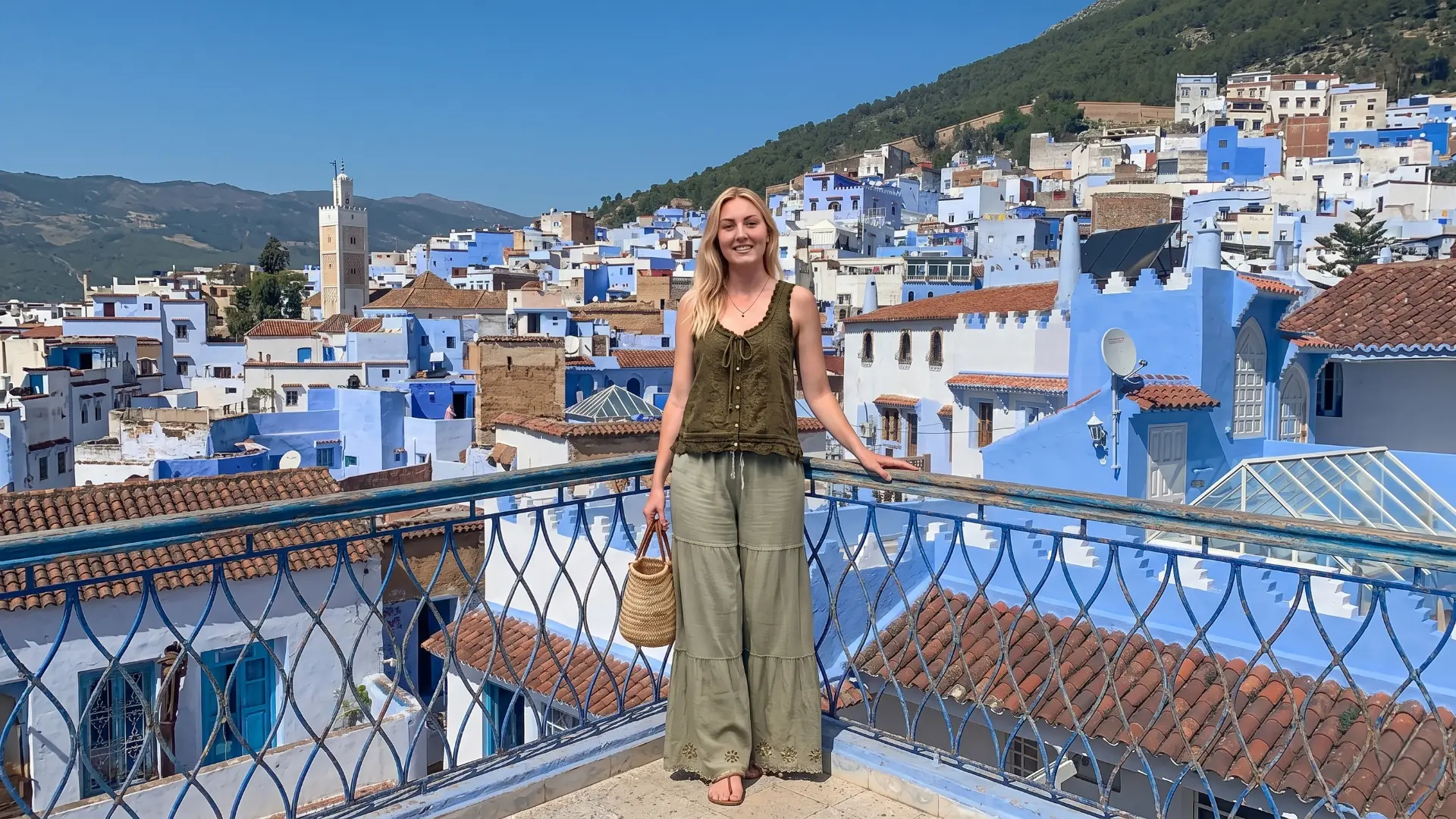
I always stay inside or right next to the medina. Waking up to blue walls and the call to prayer echoing off stone courtyards is half the experience.
- Budget: I’ve paid 100–200 MAD ($10–$20) for a clean dorm bed in places like Hostal La Casita or Rif Traveler House. They’re social, walkable, and have helpful staff.
- Mid-range/Charm: Riads are where Chefchaouen shines. I’ve booked private rooms for 300–600 MAD ($30–$60) at places like Riad Dar Sabouh, Casa Perleta, or Lina Ryad & Spa. They usually include breakfast, rooftop terraces, and those iconic tiled courtyards.
- Booking tip: I use Booking.com or direct WhatsApp inquiries for better rates during shoulder season. Always confirm if your room has AC or a fan—mountain nights can be cool, but summer afternoons get warm.
8. My Favorite Things to Do in Chefchaouen
I don’t follow rigid itineraries here, but I always make time for these:
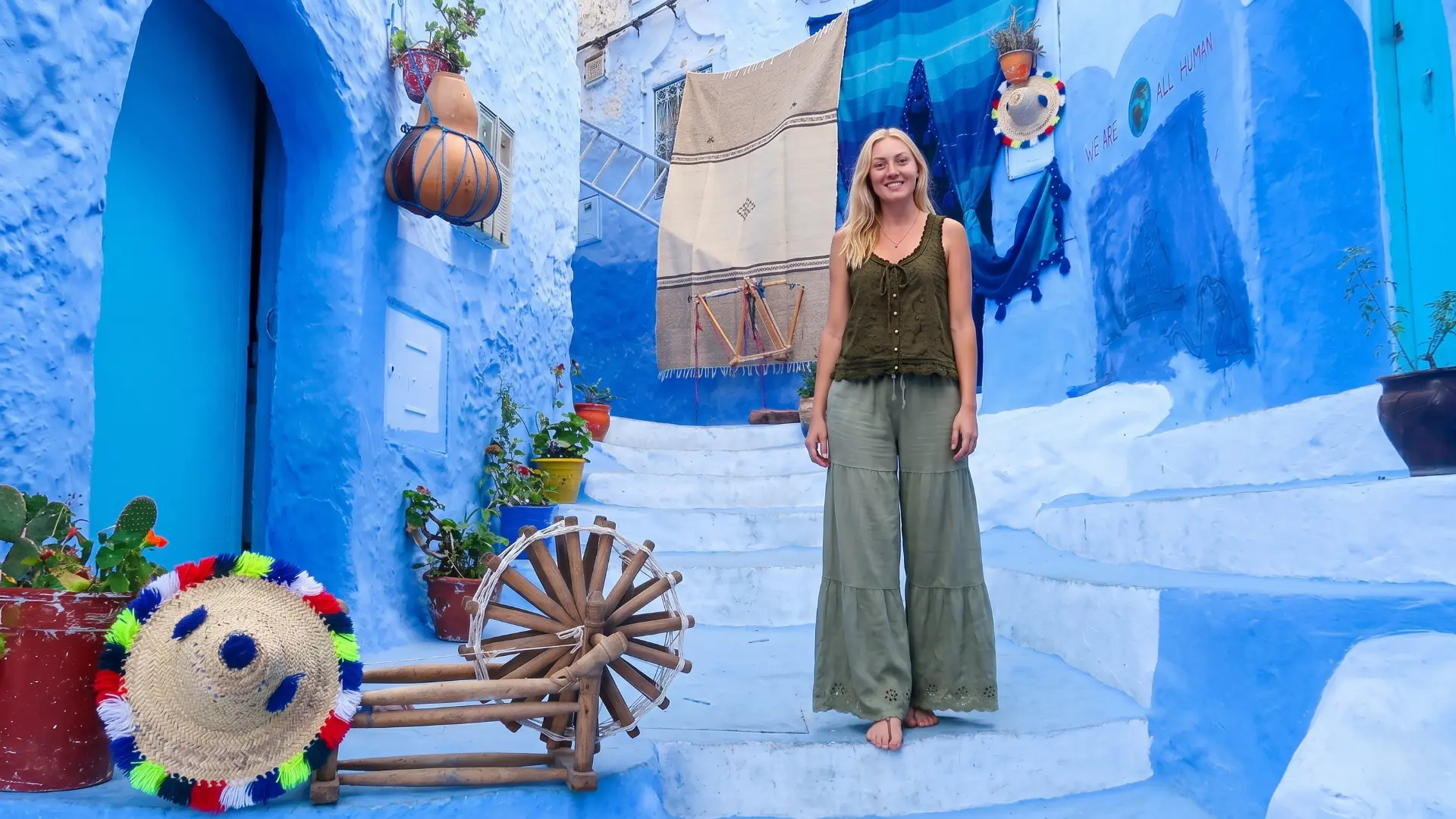
- Getting gloriously lost in the medina: I put my phone away, follow the blue gradients, and let the alleys surprise me. Every doorway, staircase, and hanging lamp feels like a scene.
- Photography spots & local helpers: You’ll see small cardboard signs near popular frames asking for 1–5 MAD. I always carry loose change. It’s not a scam—it’s how local kids or guides support themselves while helping tourists get the perfect angle.
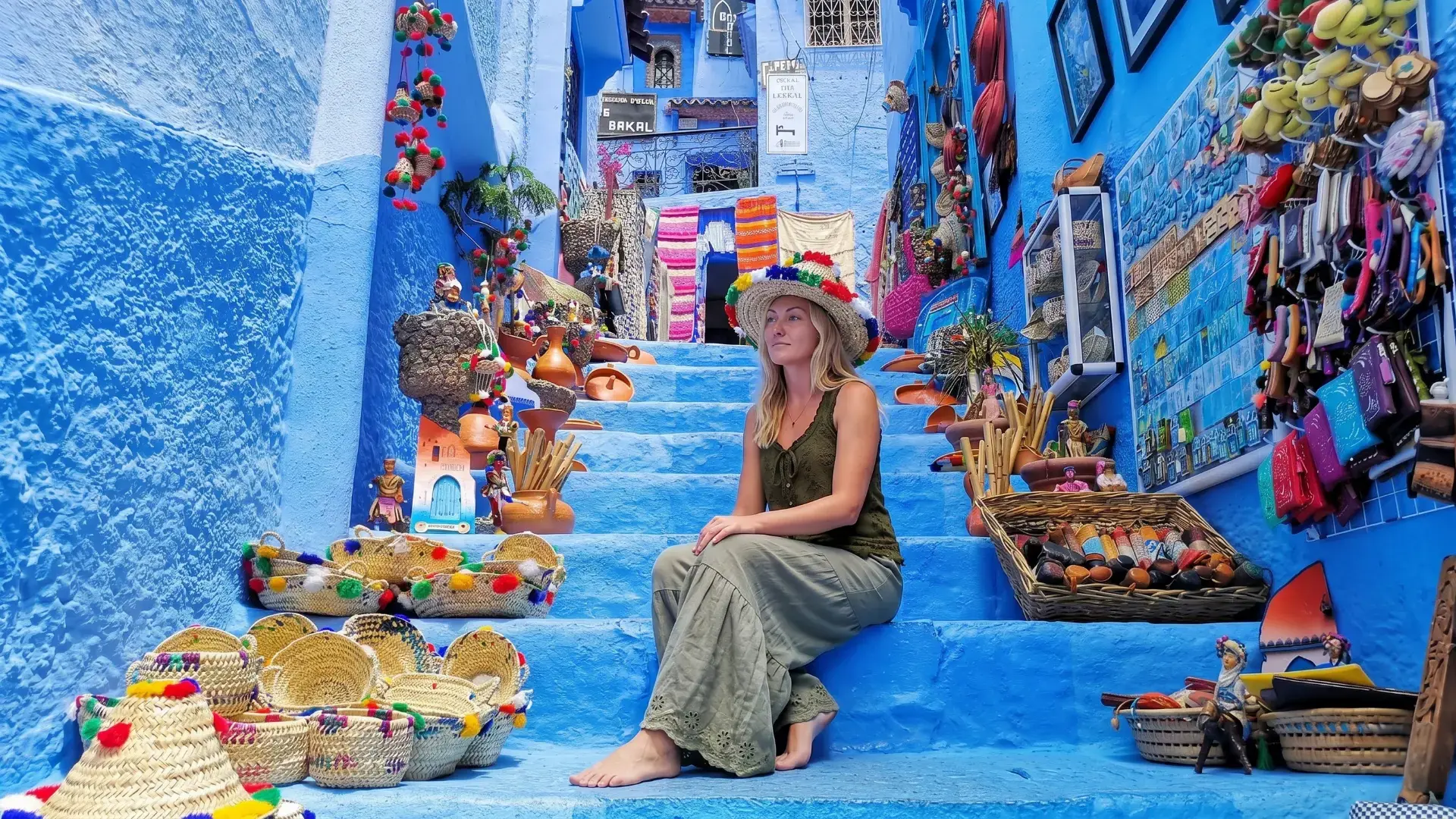
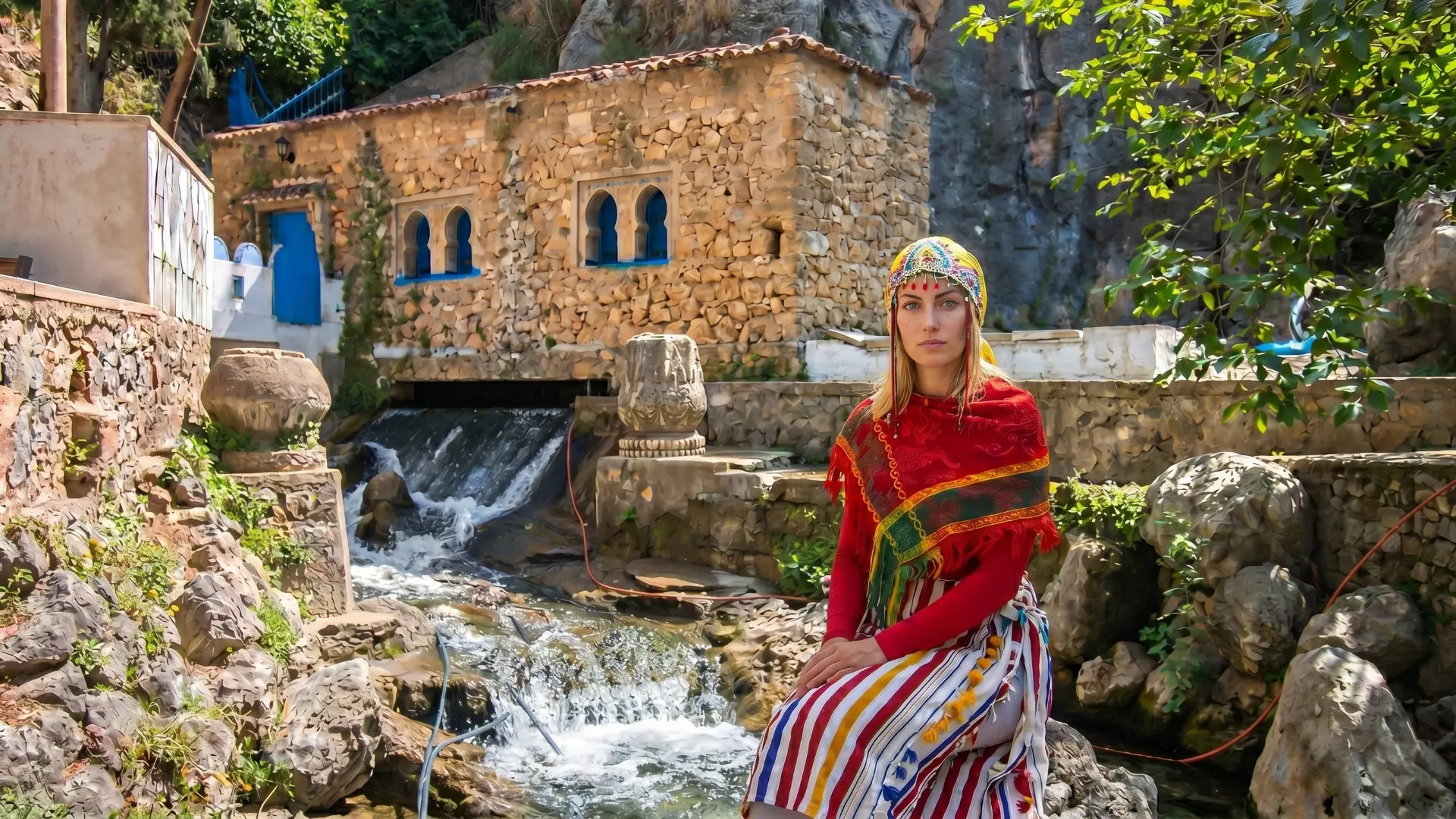
- Renting traditional clothing: Near the trail to the Spanish Mosque, I’ve met local women with bags of scarves, hats, and Berber jackets. I’ve paid as little as 10–20 MAD ($1–$2) for a full photo setup. They’re incredibly patient, take dozens of shots, and genuinely love sharing their culture. Down by the river, one vendor asks ~20 MAD for a larger selection and even has pet birds for playful photos.
- Outa el Hammam & the Kasbah Museum: The central square is the city’s living room. The Kasbah now houses the Musée de Chefchaouen (60 MAD / $6 entry, kids ~25 MAD). I always wander through the garden and climb the tower for a quiet moment.
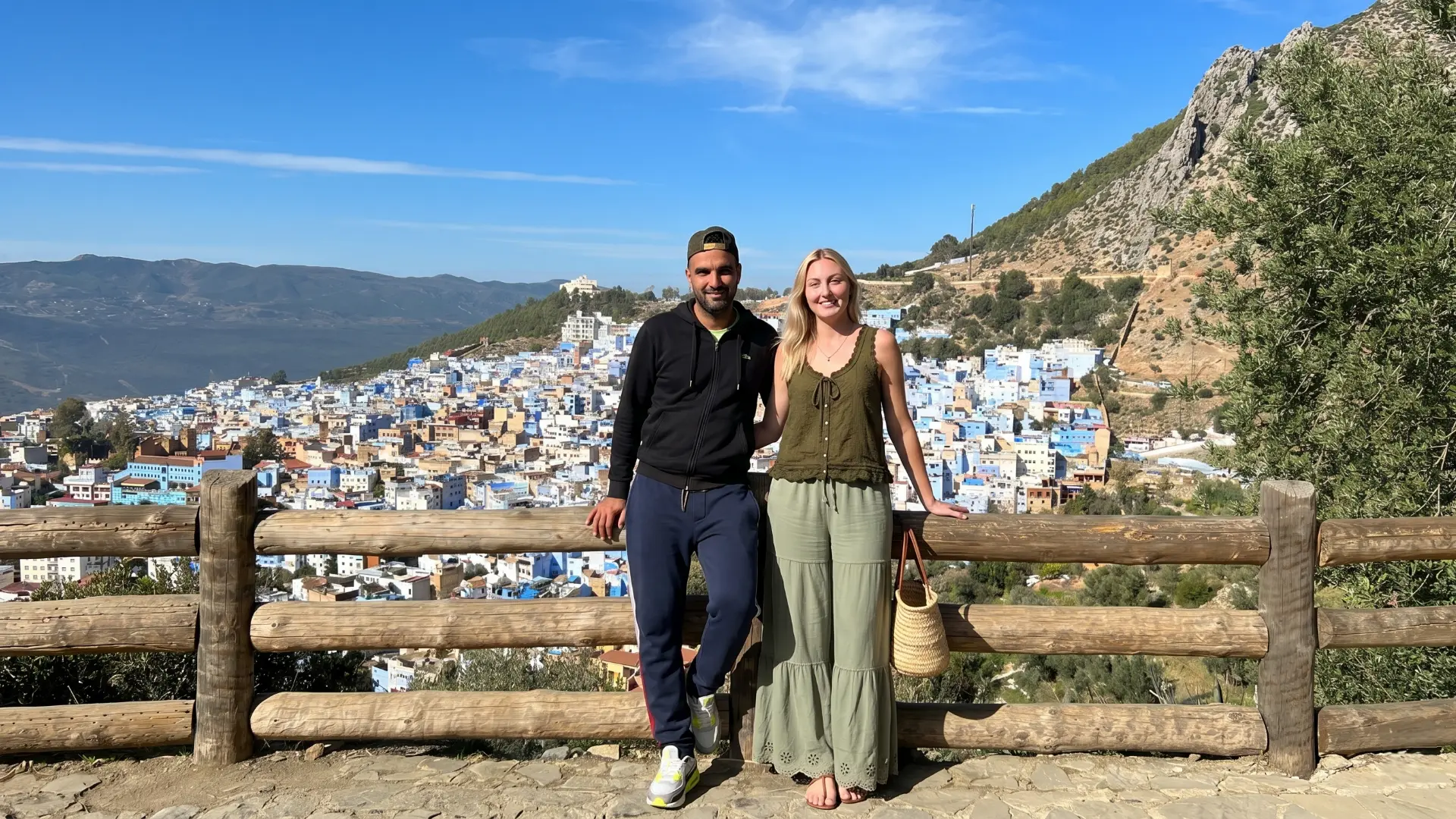
- The Spanish Mosque hike: I walk from Bab al Ansar, following the path past the Ras el’Ma spring where women traditionally wash clothes. It’s a gentle 30–45 minute uphill stroll lined with agave and prickly pear. I always time it for late afternoon. The sunset over the blue rooftops is worth every step.
9. Where I Eat: Street Food, Snacks & Terraces
I’ve tried dozens of spots, and my rule is simple: follow the locals, skip the tourist traps.
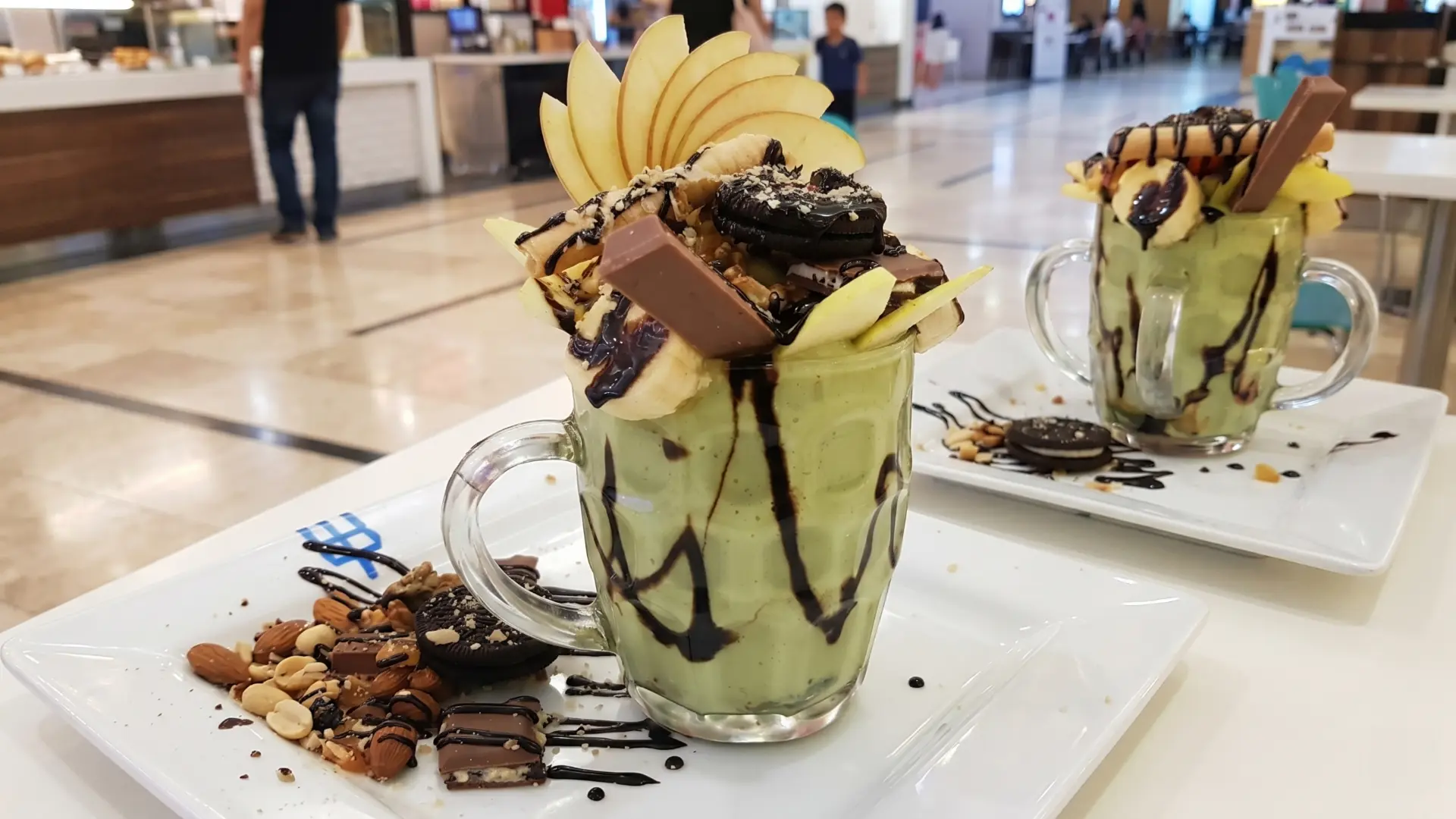
- Mehlaba snack shops: My absolute favorite is near Casa Mrabet. I’ve eaten there daily. Order Zaazaa—a thick, dreamy avocado smoothie blended with sugar, raisins, almonds, dates, milk, caramel, and sometimes whipped cream or cookie bits. It’s 15–25 MAD ($1.50–$2.50) and genuinely life-changing. They also serve incredible egg-and-goat-cheese sandwiches on fresh local bread, plus Arabic puddings and Spanish custard for dessert.
- Street food: I’ve never had a bad bite. Snail soup with chickpeas runs 3–5 MAD ($0.30–$0.50), bowls of chickpeas are ~2 MAD, and fried corn or msemen (flatbread) with honey is everywhere. I always order double portions. I’ve also grabbed fresh orange and pomegranate juices from medina stalls for 5–10 MAD. They’re perfectly sweet and ice-cold.
- Terrace restaurants: I’ll sit on a rooftop near Place Outa el Hammam just for the atmosphere. The food is hit-or-miss (I’ve had underwhelming tagines), but the views of the square, the Kasbah, and the Grand Mosque are stunning at golden hour. I go for the ambiance, not the gourmet ratings.
10. Final Thoughts
Chefchaouen doesn’t just look beautiful—it feels alive in a way few places do. It taught me to slow down, to bargain with a smile instead of frustration, to accept that getting lost is the best navigation, and that a 3 MAD bowl of snails can be a Michelin-level memory if you’re eating it on a sun-warmed step. I’ve packed my bags here twice with heavy reluctance, and I already know I’ll do it a third time.
Have you visited the Blue City yet, or are you mapping out your first trip? Drop your questions below—I’m always happy to share exact riad recommendations, my preferred photo alleys, or how to navigate the mountain buses without stress. If this guide helped you plan, I’d be so grateful if you shared it with your travel companion or saved it for your next Morocco adventure. Safe travels, and may your alleys always be blue.